Electric Bike Reparaturständer Comparison: What Actually Decides the Purchase

Lift speed, a brand name on the column and a glossy brochure decide very little about an electric bike repair stand. What decides it is how much the column lifts, how the carriage is driven, how the controls behave while both hands are on the bike, and whether the stand can be moved when the workshop layout changes. This page sets out those five questions, and shows how the ERS01019 range answers them.

30-second shortlist

The six Modelle, side by side

Every figure below is confirmed against the bicycle type at order. Nothing here is a peak marketing value measured on an empty clamp.

Modell Rated capacity Antrieb Steuerung Floor mounting
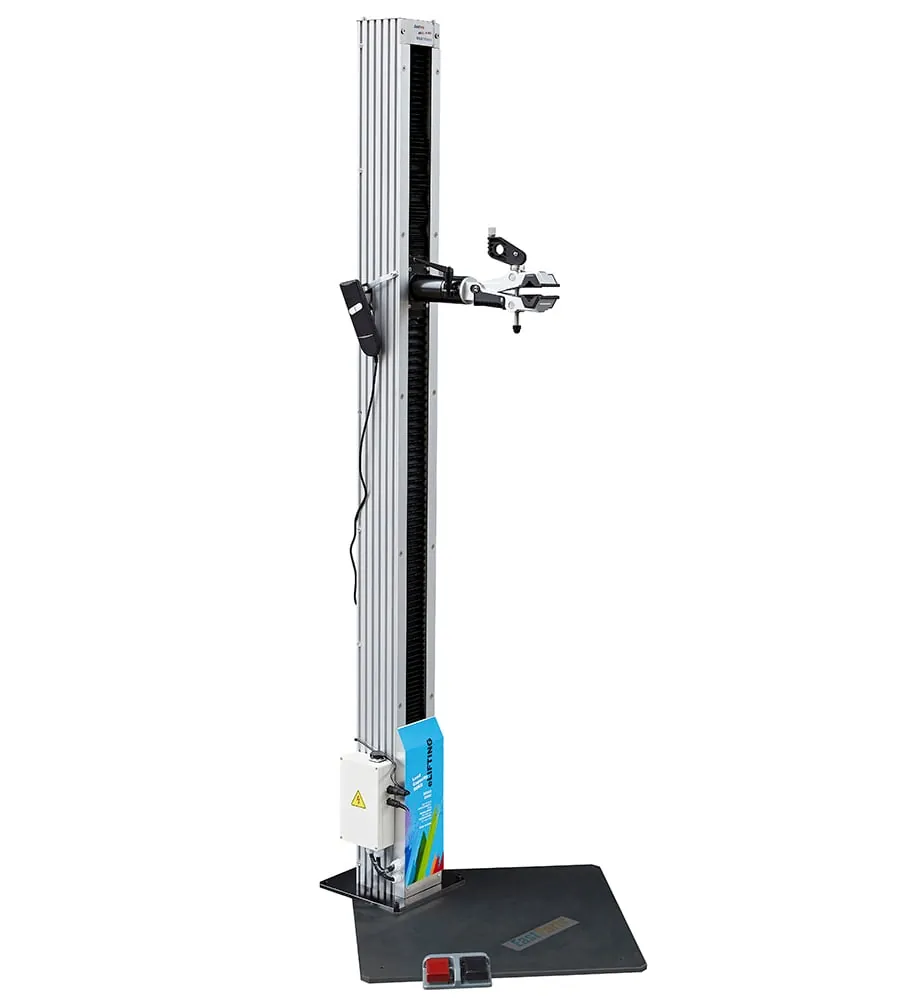
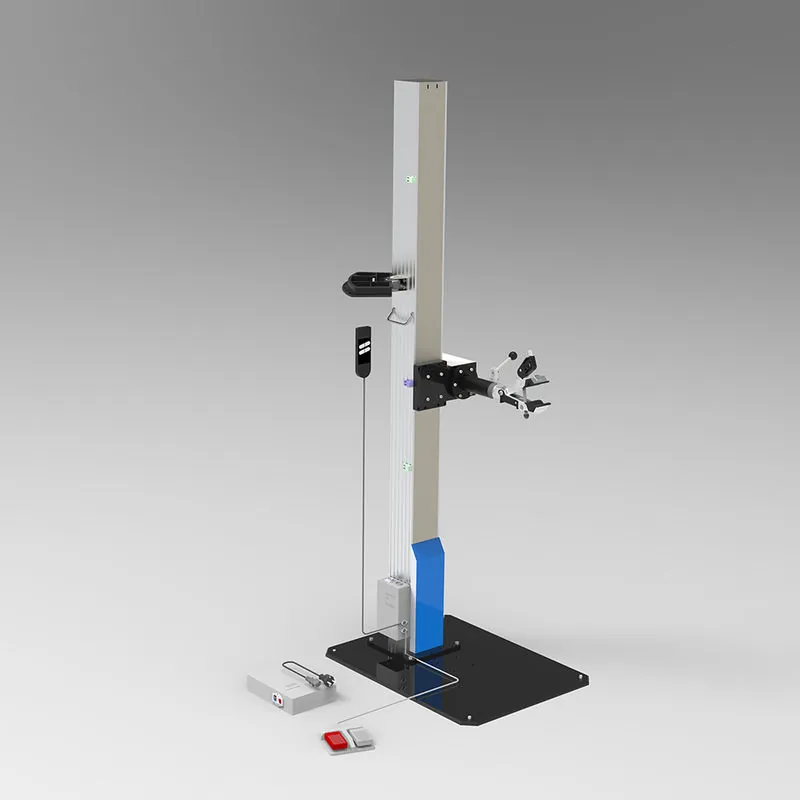
ERS01019 single-column electric bike repair stand ERS01019Single column, standard 70 kg / 154 lbs † Ball screw drive on linear guideways, servo motor and servo drive Handcontroller (hand control box) and foot pedal, hold-to-run Freistehend base plate supplied — no floor anchoring, no drilling
ERS01019R rotatable electric bike repair stand ERS01019RSingle column, rotatable clamp 70 kg / 154 lbs † Dual servo — one for lift, one for rotation Lift: foot pedal. Rotation: hand control box, 1 rpm adjustable Freistehend base plate supplied — no floor anchoring
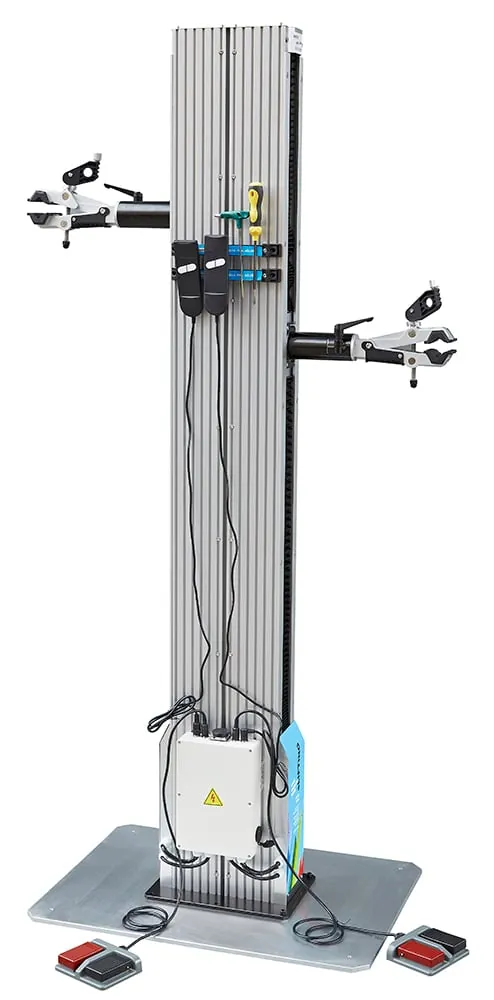
ERS01019D dual side electric lifting system ERS01019DDual side — two positions on one column 70 kg / 154 lbs per side † Two servo motors, independent carriages Per side: hand controller (hand control box) and foot pedal Freistehend base plate supplied — no floor anchoring
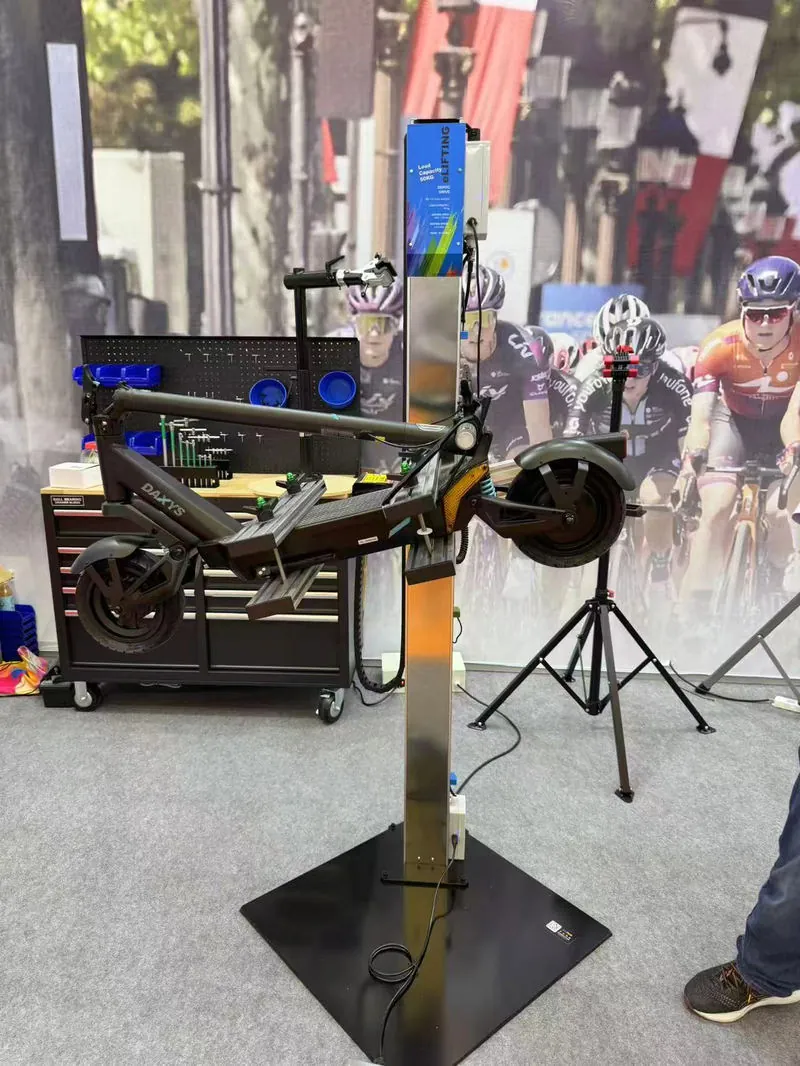
ERS01019S e-scooter repair stand with platform cradle ERS01019SScooter — platform cradle Mit Bestellung bestätigen Elektrischer Stellantrieb Fußpedal, hold-to-run Freistehend base plate supplied — no floor anchoring
ERS01019S2 scooter platform type repair stand ERS01019S2Scooter — platform deck Mit Bestellung bestätigen Elektrischer Stellantrieb Mit Bestellung bestätigen Freistehend base plate supplied — no floor anchoring
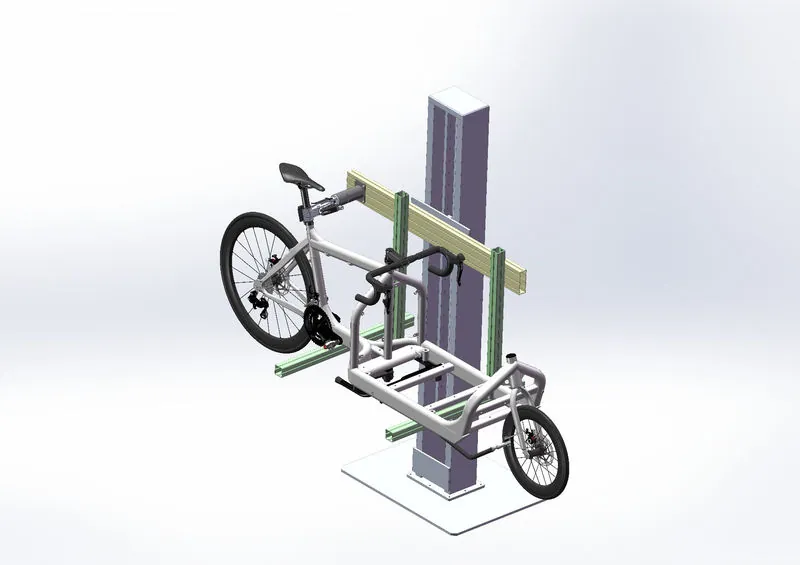
ERS01019C cargo bike lift with wide frame cradle ERS01019CCargo — wide frame cradle Mit Bestellung bestätigen Elektrischer Stellantrieb Elektrische Säule Freistehend base plate supplied — no floor anchoring

† Rated capacity is confirmed against the bicycle type at order. A long wheelbase, an off-centre load or a cargo box changes the requirement — which is why we publish the figure with the bike type attached rather than on its own.

No price is published on this page either. These machines are quoted per order, because capacity, voltage, clamping and packaging are all confirmed against the bicycles a buyer actually services. Send us the shortlist and we will price it.

Five buying criteria

The five questions that decide it

Ask these of every supplier you shortlist — including us. Each one is worth more than a lift-speed figure on a datasheet.

01

Rated capacity — the number has to come with a bike type

A capacity figure means nothing on its own. The ERS01019 range is rated at 70 kg / 154 lbs, which covers a heavy electric bike or a loaded cargo frame, and the figure is confirmed against the bicycle type when the order is placed. Ask any supplier the same question: what bicycle was on the clamp when the number was measured?

02

Antrieb type — chain, belt, worm gear, spindle or ball screw

The lifting mechanism decides maintenance, noise and how the carriage behaves under load. A ball screw drive on linear guideways, run by a servo motor and servo drive, is what the ERS01019 range is built around: the carriage travels without judder, holds its height rigidly, and stays locked when the power is off.

03

Steuerung layout — what happens when both hands hold the bike

Halten-to-run control means the drive only moves while a control is held, and stops the moment it is released — which is the behaviour a mechanic wants with a front wheel off the ground. A wired hand controller handles set-up, and the foot pedal frees both hands during the lift.

04

How it sits on the floor — anchored or free-standing

A stand that has to be bolted down commits the workshop to one layout. Every unit in this range stands on a free-standing steel base plate with no floor anchoring and no drilling, and the base plate is supplied with the machine — so a service bay can be rearranged without leaving holes in the floor.

05

Drehung unter Last — for the jobs that need a specific angle

Cable routing, brakes and gearing are easier when the frame can be turned to a working angle. On the ERS01019R the rotation has its own servo motor and is set from the hand control box at 1 rpm, and it is tested to stay smooth, with no jerk, with a 50 kg / 110 lbs bicycle on the clamp. Ask the same question of any rotatable stand: what load was it turning when it was tested?

Antrieb principles

Kette, belt, worm gear, spindle or ball screw

Four of these principles are established workshop practice. The fifth is the one this range is built on. All five are described here without naming a single brand.

Antrieb principle Maintenance Noise Behaviour under load Suited to
Kette drive Periodic lubrication, chain tensioner Moderate Proven and strong; some snatch at the stop High-volume general repair where service intervals are planned
Enclosed synchronous belt Lubrication-free Niedrig Smooth and quiet Quiet shops, layouts that change often
Worm gear Quoted as maintenance-free Very low Very stable, slower travel Heavy loads, tenders where certification leads the decision
Threaded spindle Maintenance-free Niedrig Firm and predictable; hand-crank option No-power sites, budget builds
Ball screw on linear guideways
ERS01019 range
Lubrication-free drive, individually replaceable parts Niedrig Precise travel, holds position with the power off Precision work, assembly lines, load stability
Five lifting drive principles compared — real component photos Left to right: chain drive, enclosed synchronous belt, worm gear, trapezoidal threaded spindle, and ball screw on linear guideways — shown as photographs of the real components. The last one is the drive every ERS01019 variant is built from. Kette drive Proven and strong Enclosed synchronous belt Quiet, lubrication-free Worm gear Very stable, slower travel Threaded spindle Manual option, no power Ball screw on linear guideways Precise, self-locking — ERS01019
The five lifting principles, shown as the real components rather than as products. Kette, enclosed synchronous belt, worm gear and plain threaded spindle are the common alternatives; the fifth panel is the ball screw riding on linear guideways — precise, self-locking, and the arrangement every ERS01019 variant is built on.

This table describes drive principles, not individual brands or individual machines. The right choice depends on the workload, the service plan and the tender requirements — not on which mechanism is newest.

Questions buyers ask

Electric bike repair stand FAQ

The eight questions that come up most often when a workshop or a distributor is choosing between lifting stands.

The ERS01019 range is rated at 70 kg / 154 lbs, so a heavy electric bike or a loaded cargo frame is within the working range. Kapazität is confirmed against the bicycle type at order, because a long wheelbase or an off-centre load changes the requirement.

Lift speed is always quoted at no load, and the published figures in this market are often optimistic. A lifting column earns its keep on lifting force and stability — holding a loaded bike rigid at height, with no sag and no snatch when it stops. In practice these lifts do not feel slow, and under a heavy bike the travel reads as steady and controlled.

In a workshop it is the same job. An electric bike repair stand is an electric lifting column with a bicycle clamp on the carriage. This range covers the single-column ERS01019, the dual side ERS01019D for two mechanics working at once, the rotatable ERS01019R for angle-critical work, and the scooter and cargo variants for machines a conventional clamp cannot hold.

No. Every unit stands on a free-standing steel base plate with no floor anchoring and no drilling, and the base plate is supplied with the machine — so the workshop layout can change without leaving holes in the floor.

By workload, not by novelty. Kette drive suits high-volume repair where a lubrication interval is already part of the service plan. An enclosed belt suits quiet shops. A worm gear suits heavy loads, and a threaded spindle suits no-power sites. A ball screw on linear guideways is the choice where precise travel and load stability matter most — for example an assembly line, or a bay where the carriage has to hold a heavy bike rigidly with the power off.

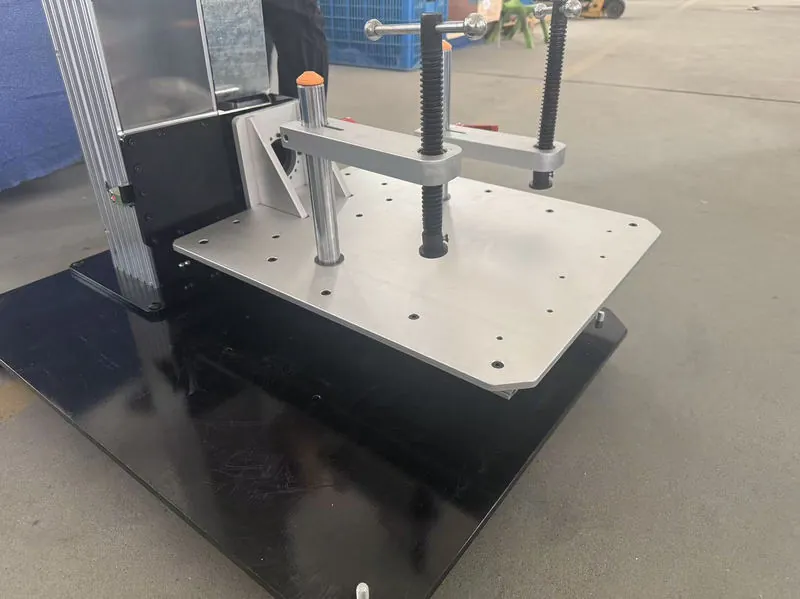
With the right variant. The ERS01019C carries a long-wheelbase cargo frame on a wide two-point cradle, the ERS01019S holds an e-scooter by its deck in an adjustable cradle, and the ERS01019S2 lays the scooter on a flat platform deck held by twin T-handle screw clamps. A conventional bicycle clamp cannot hold any of these three.

On the ERS01019R, yes. Rotation is driven by its own servo motor, sized for loaded operation rather than for an empty clamp, and it is tested with a 50 kg / 110 lbs bicycle at 1 rpm with no jerk.

The variants you are comparing, the bicycle or scooter types they will hold, the quantity, and the destination port. A sales engineer replies with pricing and lead time within one business day. Drawings, STEP Modelle and spare-part lists are available on request.

Comparing more than the lifting range? The electric lifting category lists every model with full specifications, and the repair stand range covers tripod and floor stands for conventional bicycles.

Send us the Modelle you are comparing.

Tell us the variants, the bicycles they will hold and the destination port — a sales engineer comes back within one business day with pricing, lead time and the drawings you need to compare properly.